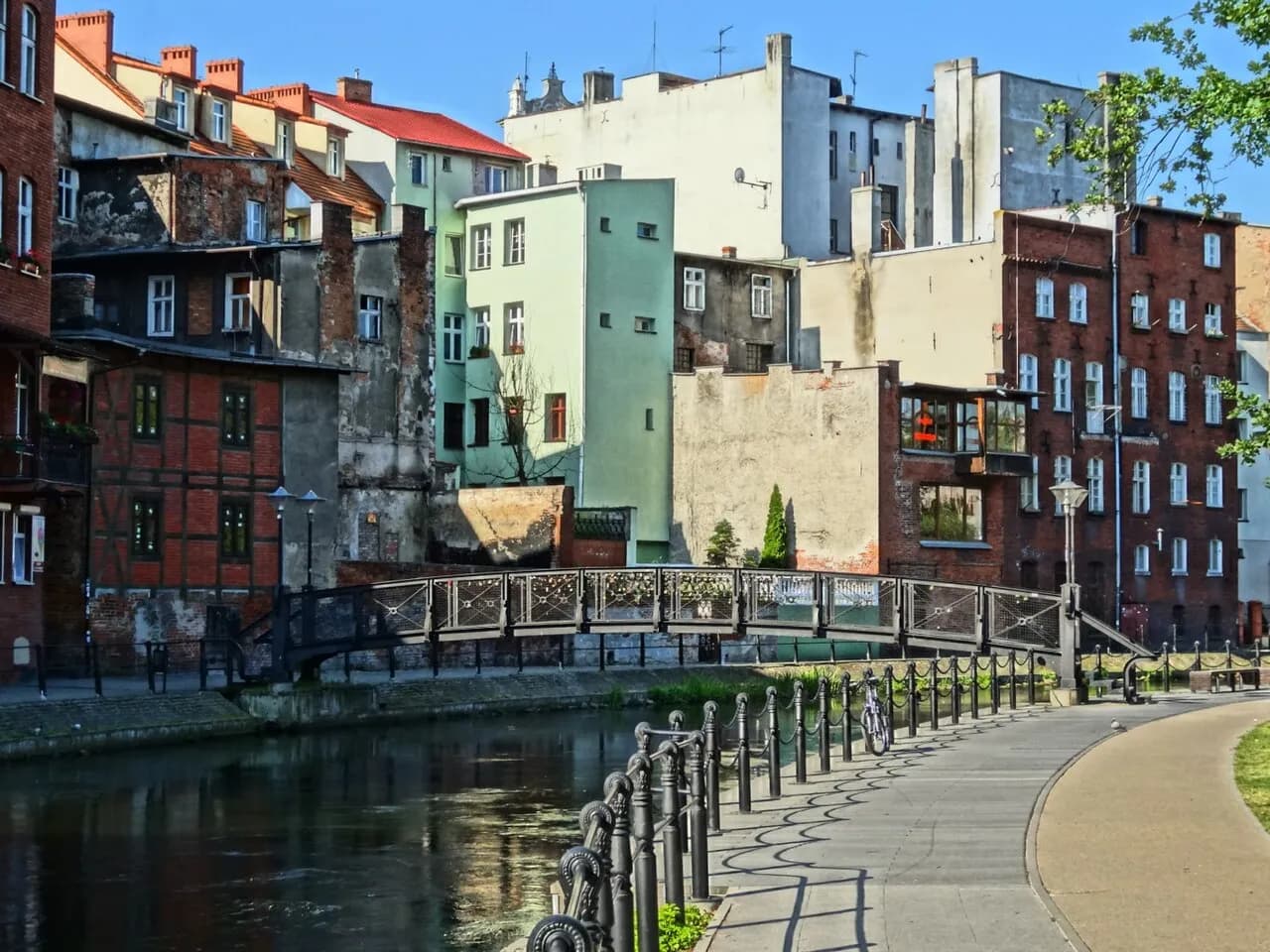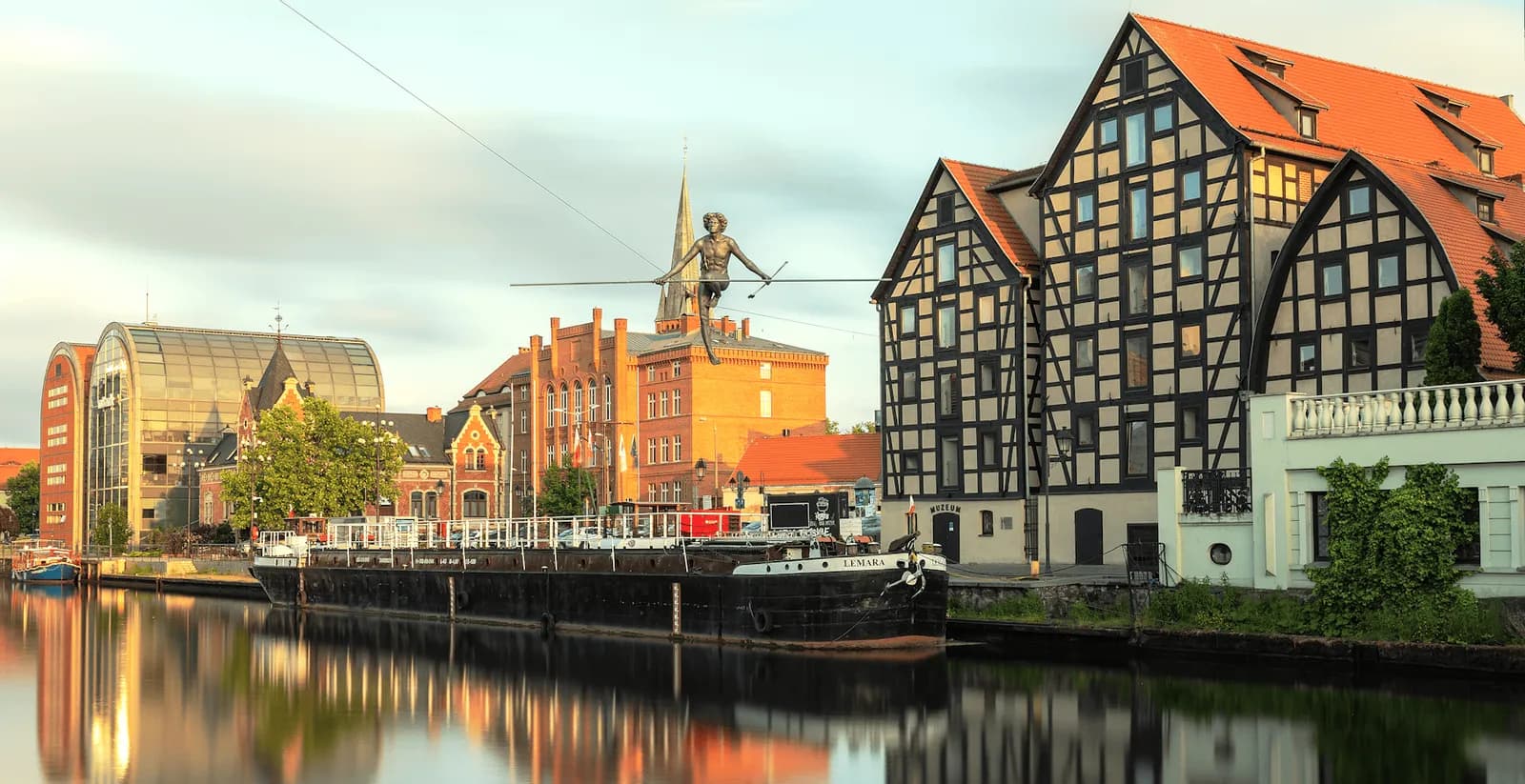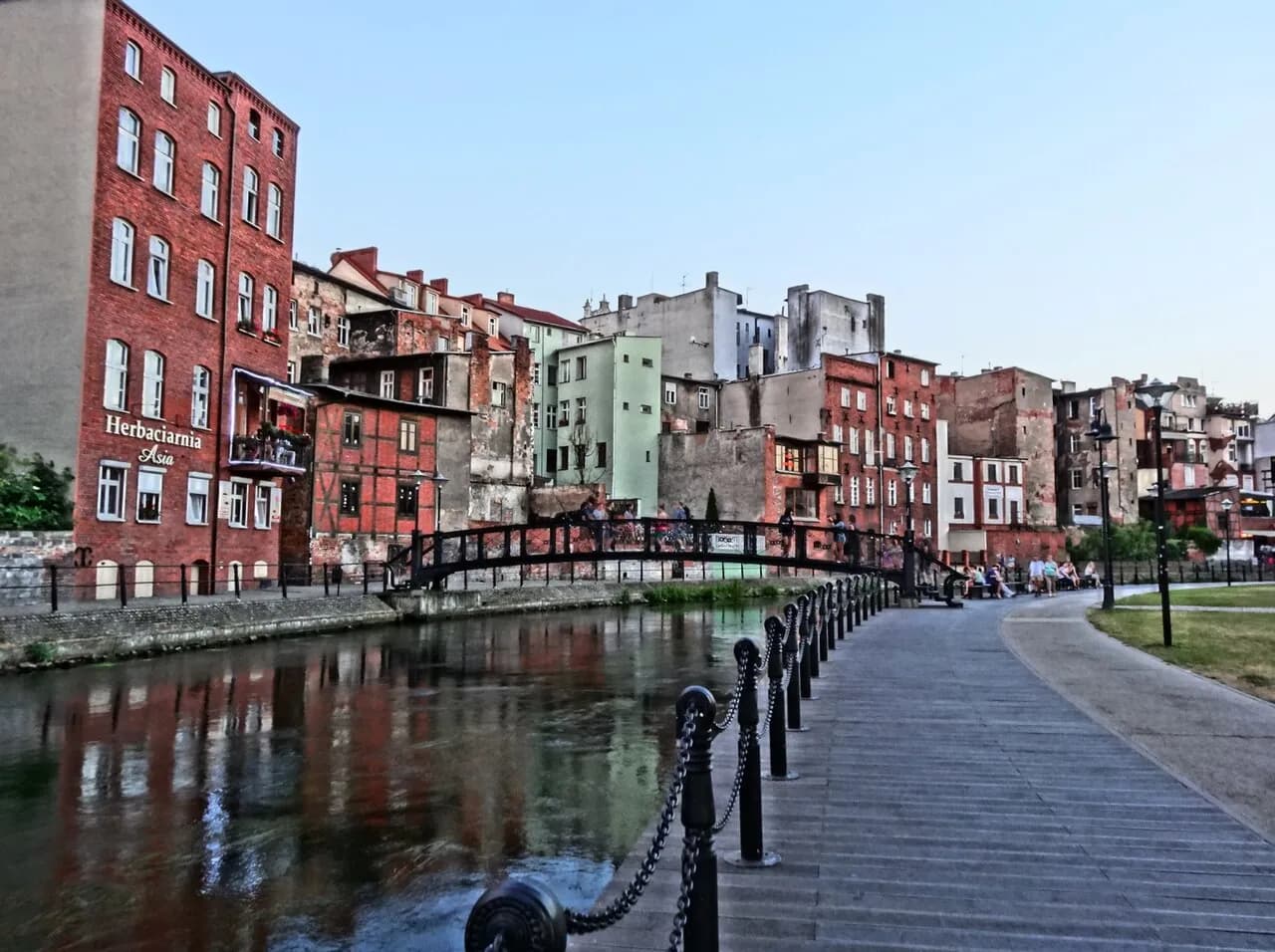
Few places capture the character of Bydgoszcz quite like Wenecja Bydgoska. Hidden beside the gentle waters of the Młynówka River, this historic riverside quarter offers a striking reminder of the city's long relationship with its waterways. Rows of weathered brick buildings stand almost directly above the water, their reflections shimmering beneath them as pedestrians stroll between the Old Town and nearby Wyspa Młyńska.
For many visitors, it is one of those places that immediately defines Bydgoszcz. The combination of industrial architecture, riverside scenery and centuries of history creates a setting that feels both peaceful and authentic. It is no surprise that Wenecja Bydgoska has become one of the city's most photographed landmarks and an essential stop for anyone exploring the centre.
Although its nickname translates as Bydgoszcz Venice, comparisons with Italy only tell part of the story. This is not a place of marble palaces or winding canals, but a distinctly Polish waterfront shaped by commerce, craftsmanship and engineering. Its beauty lies in its honesty, preserving the character of a working riverside that helped build the modern city.
A Riverside Built On Industry
Wenecja Bydgoska occupies the western edge of Bydgoszcz's Old Town, following the course of the Młynówka, a historic branch of the Brda River. The quarter stretches around streets including Przyrzecze, Długa, Wełniany Rynek and Poznańska, linking some of the city's oldest neighbourhoods with the green spaces of Wyspa Młyńska.
Long before the area became a favourite with photographers, the river was the lifeblood of local industry. Mills, workshops, warehouses and merchants all depended on the steady flow of water, while the surrounding streets developed into a busy commercial district serving one of northern Poland's fastest-growing cities during the nineteenth century.
Many of the buildings were constructed directly beside the riverbank, with their rear walls almost touching the water. This unusual arrangement gave the impression that the buildings rose straight from the Młynówka itself, earning the area the affectionate nickname that remains in use today.
The Story Behind The Brick Façades
Unlike many restored historic districts, Wenecja Bydgoska still reflects its working past. The sturdy brick buildings lining the waterfront were never intended as grand residences. They housed businesses that formed part of Bydgoszcz's thriving economy, from merchants and craftsmen to laundries, dye works and warehouses.
One of the best-known businesses was Wilhelm Kopp's Laundry and Dye Works, established in 1903. The nearby water was essential for processing textiles, illustrating how closely the district's industries depended upon the river.
This practical heritage is still visible today. Simple brick elevations, warehouse doors and narrow plots tell the story of a city built through trade rather than grandeur. Together, they create one of Bydgoszcz's most distinctive architectural landscapes, setting Wenecja Bydgoska apart from historic waterfronts elsewhere in Europe.
A Changing Waterfront
Like many industrial areas across Poland, Wenecja Bydgoska experienced periods of decline during the twentieth century as traditional industries disappeared. Some buildings deteriorated, while others found new purposes as the city evolved.
The regeneration of neighbouring Wyspa Młyńska transformed the wider area and renewed interest in the historic waterfront. Today, landscaped pathways, cafés, museums and public spaces attract both residents and visitors, while carefully restored buildings stand alongside others awaiting renovation.
Rather than hiding its history, Wenecja Bydgoska wears it proudly. The contrast between restored façades and timeworn brickwork reminds visitors that Bydgoszcz is a city continually evolving while respecting its industrial roots.
One Of Bydgoszcz's Most Photographed Views
The finest views of Wenecja Bydgoska are often found from across the water on Wyspa Młyńska. From here, the full sweep of the riverside buildings unfolds along the Młynówka, framed by trees, footbridges and the calm waters below.
Early mornings bring soft reflections across the river, while evenings bathe the brick façades in warm light, making the area particularly popular with photographers throughout the year. Every season offers something different, from spring greenery to colourful autumn foliage mirrored in the water.
Despite its popularity, the district has retained a calm, unhurried atmosphere. It remains a place where locals pause during riverside walks, where visitors discover quieter corners beyond the main tourist routes, and where Bydgoszcz's industrial heritage feels part of everyday life rather than something preserved behind museum walls.
Exploring Wenecja Bydgoska
A visit to Wenecja Bydgoska fits naturally into any walk around central Bydgoszcz. Within a few minutes, visitors can reach Stary Rynek, the museums of Wyspa Młyńska, Opera Nova and the riverside boulevards that have become a defining feature of the modern city.
It is this close connection between past and present that makes the district so memorable. Historic warehouses stand opposite landscaped parks, former industrial waterways have become places for leisure, and centuries-old brick buildings continue to shape the city's skyline.
For anyone wishing to understand what makes Bydgoszcz unique, Wenecja Bydgoska provides one of the best places to begin. More than simply a picturesque riverside, it reflects the history, resilience and identity of a city that has always looked to its rivers for inspiration and prosperity.
image credit: Wikimedia Commons, public domain